
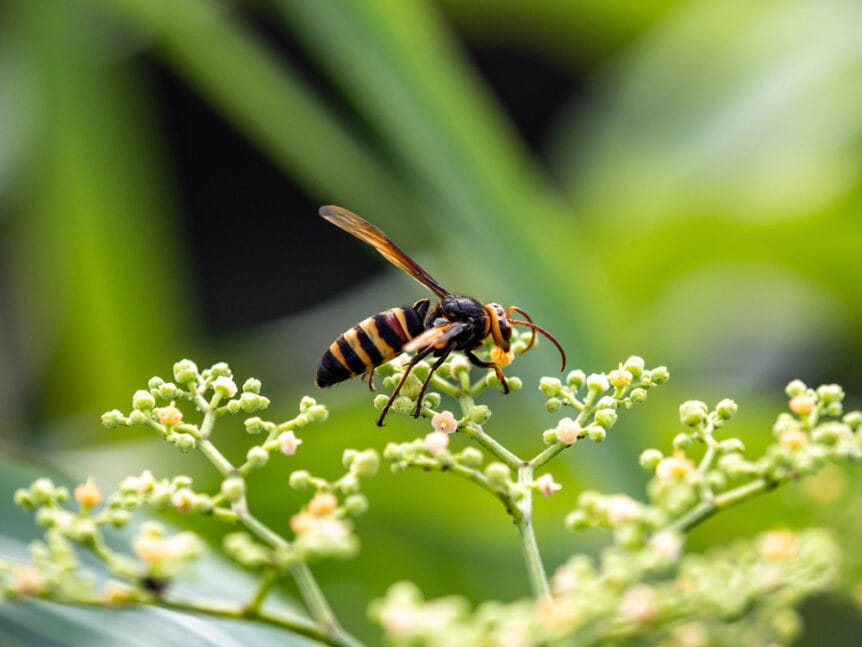
Hornets and yellow jackets are two of the most aggressive stinging insects that homeowners encounter during warmer months. While they may look similar at first glance, their behavior, nesting habits, and level of aggression differ. Understanding the differences between hornets vs yellow jackets can help you identify which insect is near your home and determine the safest response.
Key Differences
When comparing hornets and yellow jackets, the most important thing to understand is that both belong to the wasp family. However despite this shared classification, several characteristics can vary.
The biggest differences between hornets and yellow jackets include:
- Body size
- Color patterns
- Aggression levels
- Nest structure and location
- Food preferences
Hornets tend to be larger and build visible aerial nests in trees or on structures. Yellow jackets are smaller but often more aggressive, especially around food sources. Because yellow jackets are commonly mistaken for bees or other wasps, many homeowners misidentify them. It is important to correctly identify an insect when deciding how to handle a nest safely.
How to Identify Hornets vs Yellow Jackets
Learning how to distinguish hornets vs yellow jackets helps you determine whether a nest may pose a risk near your home.
Hornet Appearance
Hornets are one of the largest members of the wasp family; their bodies are thicker and more robust than most wasps.
Common characteristics include:
- Larger size than most stinging insects
- Brown or reddish tones mixed with yellow markings
- Thick bodies with less defined striping
- Paper-like nests that hang from trees or structures
Because of their size, hornets can appear more intimidating than yellow jackets. However, they are typically defensive rather than aggressively searching for food near people.
Yellow Jacket Appearance
Yellow jackets are smaller than hornets but are often encountered more frequently around homes.
They usually have:
- Bright yellow and black stripes
- Smooth, shiny bodies
- Narrow waists
- A compact body shape
Yellow jackets are sometimes mistaken for bees because of their coloring. However, bees have fuzzy bodies while yellow jackets have smooth, glossy bodies. Seeing multiple yellow jackets flying near the ground or around trash bins often indicates a nearby nest.
Nesting Habits: Where Hornets vs Yellow Jackets Build Nests
Another major difference between hornets vs yellow jackets is where they build their nests.
Hornet Nests
Hornets build large paper nests made from chewed wood fibers mixed with saliva. These nests are usually suspended above ground.
Common hornet nest locations include:
- Tree branches
- Bushes or shrubs
- Roof overhangs
- Attic openings
- Sheds or outdoor structures
Hornet nests can grow surprisingly large by late summer, sometimes reaching the size of a basketball or larger.
Yellow Jacket Nests
Yellow jackets prefer hidden nesting areas and frequently build colonies underground.
Common yellow jacket nesting sites include:
- Abandoned rodent burrows
- Underground cavities
- Wall voids inside homes
- Attics or crawl spaces
- Landscaping beds
Because these nests are often hidden, homeowners may accidentally disturb them while mowing lawns or gardening. In Western New York, yellow jacket activity usually increases during late summer when colonies reach peak size.

Inspection
Our experts assess your specific pest issues. With over 50 years in the business, you can count on Bugg Control to meticulously inspect your home and find out exactly what is causing problems.
Treatment
During the summer months in Buffalo, NY, bees, wasps, hornets and other stinging insects can be a nuisance. Being proactive can be a successful strategy for a bee-free summer.
No Buggs Guarantee
Bugg Control is a pest control specialist serving the Buffalo, NY area with a “No Buggs Guarantee”. We also offer ant, stink bug, and spider control services.
Which Is More Dangerous: Hornets or Yellow Jackets?
When homeowners ask about hornets vs yellow jackets, the most common question is, “Which insect is more dangerous?”
Both species can deliver painful stings and will defend their nests aggressively if threatened. However, yellow jackets are generally considered more aggressive toward people. Yellow jackets are attracted to food sources such as sugary drinks, fruit, and garbage. Because of this behavior, they often appear at outdoor gatherings and picnics. Hornets, on the other hand, usually focus on defending their nests. They are less likely to bother people unless the nest is disturbed.
Why Hornets and Yellow Jackets Become Aggressive
The behavior of stinging insects changes throughout the season. Colonies grow steadily during spring and summer. By late summer, nests contain thousands of workers whose primary goal is protecting the colony.
Aggression increases when:
- Nests grow larger
- Food sources become scarce
- Colonies begin preparing for winter
- Nests are accidentally disturbed
Yellow jackets, in particular, become more aggressive in late summer because natural food sources decline. As a result, they seek out sugary drinks, fruit, and garbage around homes. This is why encounters with yellow jackets increase in August and September.
What To Do If You Find a Hornet or Yellow Jacket Nest
If you discover a nest near your home, the safest response is to avoid disturbing it. Many stinging insect attacks occur when homeowners accidentally provoke the colony while attempting removal.
Recommended safety steps include:
- Keep a safe distance from the nest
- Prevent pets and children from approaching the area
- Avoid spraying or hitting the nest
- Contact pest control professionals for removal
For more information on how to get rid of hornets in your home, check out this blog. Professional technicians use specialized equipment and protective gear to remove nests safely. Attempting to remove a nest without training can provoke aggressive swarming behavior.
How to Reduce Stinging Insects Around Your Home
While it is impossible to eliminate all stinging insects outdoors, several steps can reduce the chances of nests forming near your home.
Helpful prevention strategies include:
- Keep garbage bins tightly sealed
- Clean up food and sugary drinks outdoors
- Trim trees and shrubs near structures
- Seal small openings in siding and rooflines
- Inspect sheds, decks, and roof overhangs for early nest formation
Early detection in spring is important because nests are much smaller and easier to remove before colonies expand. Routine inspections can help identify problems before they grow.
FAQ: Hornets vs Yellow Jackets
Both insects can sting repeatedly, but yellow jackets are usually more aggressive toward people because they actively search for food around human activity.
Yes. Unlike bees, hornets and yellow jackets can sting repeatedly because they do not lose their stingers after attacking.
Hornets usually build hanging paper nests in trees or on structures. Yellow jackets are the species more likely to nest underground.
As colonies grow and natural food becomes scarce, yellow jackets search for sugar and protein sources around homes and outdoor gatherings.
Removing nests without protective equipment can trigger aggressive attacks. Professional removal is typically the safest option.
Sugary drinks, uncovered food, trash bins, and ripe fruit are common attractants.
No. Most hornet and yellow jacket colonies die off during winter. New queens start fresh nests the following spring.
Need Help Removing a Hornet or Yellow Jacket Nest?
Stinging insect colonies grow rapidly during summer and can become aggressive if disturbed. Professional removal is the safest way to eliminate nests and protect your family. If you have noticed increased hornet or yellow jacket activity around your home, an inspection can help determine the source.
Contact us today to schedule a professional nest inspection and removal service.
More from Bugg Control, Inc.
Check out information about “buggs” and more to be informed about keeping your home safe from pests. If you have questions or want pest control expertise, contact us today!
Stay up-to-date by following our socials: Facebook | YouTube
