
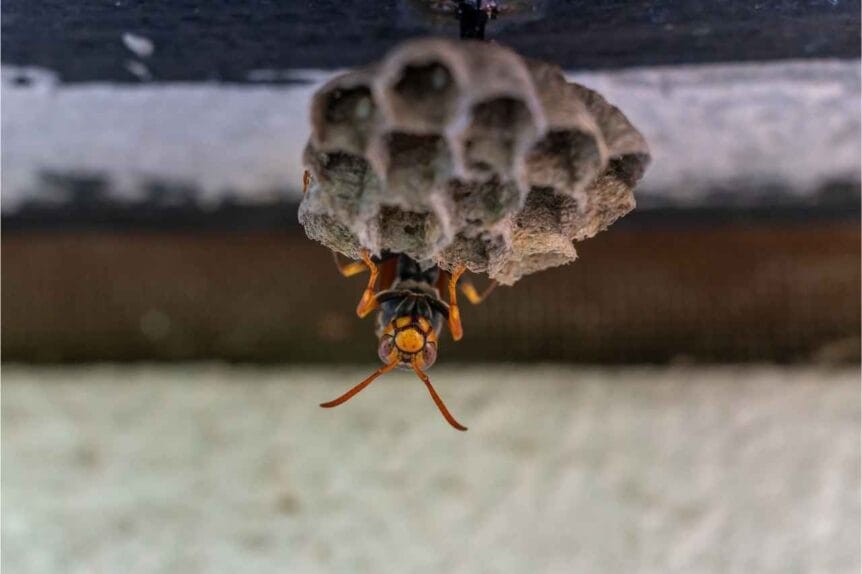
Why Wasps Get More Aggressive in the Fall
Most wasp colonies, including yellow jackets and hornets, follow a seasonal cycle. In spring and early summer, the queen lays eggs and workers focus their energy on feeding larvae in the nest. The larvae produce a nutritional secretion that the adult workers eat in return, keeping the whole colony organized.
This shifts by late summer. The queen slows egg production, leaving worker wasps with little to no larvae to tend to, and no main food source. Most worker wasps die before the first frost without a steady source of food and work.
This creates a population of thousands of wasps without work, making them unpredictable. They haven’t exactly gotten meaner, just more likely to sting perceived threats that they would’ve ignored earlier in the season.
What wasps are looking for in September and October
When their larval food source declines, wasps start to look for carbohydrates for their energy supply. That means they’ll come for any food like soda, fruit, baked goods, and other sweet or fermented treats. Protein is another nutrient that’s on their radar. Expect to attract some wasps if you’re grilling or have uncovered trash cans outside.
Wasps may seem bolder when they land on your food, hover around your face, and refuse to move. They’re hungry and running out of time, which makes them more willing to take risks they would’ve stayed away from in the spring or early summer.
Which wasps are most likely to sting this time of year?
In the Buffalo and Western New York area, yellow jackets are the biggest concern in fall. They’re the most likely species to be attracted to your food and drinks, and they’re capable of stinging multiple times. Unlike honey bees, yellow jackets don’t lose their stinger after one sting.
Bald-faced hornets can also be aggressive in fall, especially if their large, paper-mache style nest is still active. If you find one on your property, it’s best to leave it alone and call a professional.
Paper wasps, the ones that build open-celled nests under eaves and decks, are generally less aggressive but will sting if they feel their nest is threatened. As temperatures drop, they tend to scatter and look for places to overwinter, including your garage, attic, or any gaps around your home’s exterior.
For more on telling these species apart, check out our post on hornets vs. yellow jackets.
When Are Wasps Most Active?
Wasps are most active during warm daylight hours, typically mid-morning through late afternoon. They slow down significantly in cooler temperatures and are rarely active at night. In fall, you’ll notice peak activity on warm sunny days, especially when the temperature climbs above 50°F.
As September turns to October, activity starts tapering off, though warm stretches can bring wasps back out in force. The first hard freeze in Western New York is usually what ends the season for good.
If you need to do yard work near a known nest, early morning on a cool day is your lowest-risk window.
How to Avoid Getting Stung in Fall
A few practical steps can make a real difference:
- Cover food and drinks outdoors. Open cans are a common way people get stung. A wasp can crawl inside while you’re not looking.
- Keep trash sealed. If your outdoor bins don’t have tight-fitting lids, wasps will find them.
- Move slowly around wasps. Swatting at them or moving suddenly increases your risk. If one lands on you, stay calm and let it leave on its own.
- Don’t wear strong fragrances outdoors. Floral perfumes and scented lotions can attract wasps looking for food.
- Seal gaps around your home. Before winter, check your eaves, garage, and any openings around windows and doors. This is where wasps and hornets look to overwinter.
When to Call a Pest Control Professional
If you’ve found an active wasp or hornet nest on your property, fall is not the time to try removing it yourself. The colony is at its largest this time of year, and a single disturbed nest can mean dozens of stings in seconds.
Call a pest professional when you notice:
- A visible nest under your eaves, in a shrub, or underground
- Repeated wasp activity in the same area of your yard
- Wasps entering or exiting a gap in your siding or roofline
- A nest that was treated earlier in the season but seems active again
If you’re dealing with a wasp or hornet problem in the Buffalo area, contact us today for professional bee control services. Our team can safely remove active nests and treat the area to prevent new ones from forming.
FAQ
Why are wasps so aggressive?
Wasps are defensive by nature and will sting when they feel their nest or themselves are threatened. That defensiveness peaks in fall because colonies are at their largest, food sources are running out, and the normal structure of the colony is breaking down. The result is a large population of wasps that are quicker to react to perceived threats than they are earlier in the season.
When do wasps go away?
In Western New York, wasp activity typically slows down in October and stops after the first hard frost, usually in late October or November. Worker wasps die off as temperatures drop, and only newly mated queens survive the winter by finding a sheltered spot to hibernate. Those queens start new colonies the following spring.
When are wasps least active?
Wasps are least active during cool mornings, at night, and during cold or rainy weather. They slow down significantly below 50°F. If you need to deal with a nest or do yard work near one, early morning on a cool day is your safest window.
Why are wasps bad in the fall?
Fall is when wasp colonies are at peak size and their food sources are disappearing. Worker wasps become more aggressive and erratic as the colony structure breaks down, and they actively scavenge for sugary foods and drinks. This combination of high numbers and increased defensive behavior is what makes September and October the most problematic time of year.
What should I do if I find a wasp nest in the fall?
Do not disturb it. If the nest is in an area where people or pets could come near it, call a pest control professional. Even as temperatures drop and the colony begins to die off naturally, the wasps inside will still defend the nest aggressively if it’s threatened.
Can wasps sting multiple times?
Yes. Most wasps, including yellow jackets and hornets, can sting multiple times. They don’t lose their stinger the way honey bees do, which is part of why an agitated wasp near a nest is more dangerous.