
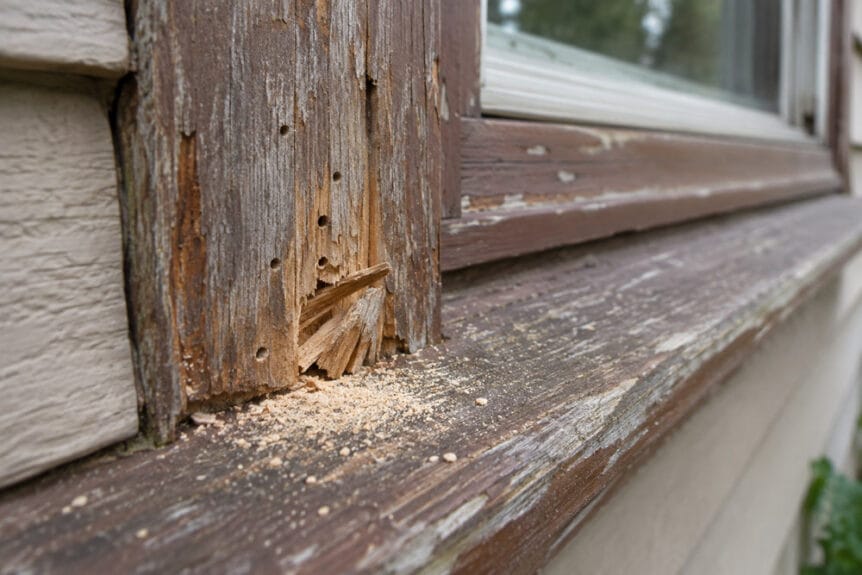
Noticing small holes, sawdust-like piles, or hollow-sounding wood around your home? It could be termites, carpenter ants, or wood-boring beetles, and figuring out which one matters. Learn how to tell them apart, why fall is exactly when this kind of damage tends to get noticed, and what a WDI inspection actually involves.
Signs of Wood-Destroying Insects in Your Buffalo Home This Fall
Termites, carpenter ants, and wood-boring beetles all damage wood differently. The warning signs all show up in similar places: window and door frames, porches, decks, sill plates, and any wood that stays damp longer than it should. Look for small holes in wood surfaces, piles of sawdust-like material near baseboards and wood trim, and wood that sounds hollow when tapped. Soft or crumbling wood, especially anywhere that’s had past water damage, is also worth a closer look.
None of these signs tell you on their own what pest you’re dealing with, but that something is actively damaging the wood in your home. It’s important to pin down what insect is doing so, since termites, carpenter ants, and wood-boring beetles call for different approaches. Treating the wrong one won’t solve the problem.
Carpenter Ants vs. Termites vs. Wood-Boring Beetles: How to Tell Them Apart
It’s easy to confuse these three pests. However, each one leaves a different kind of evidence behind.
Termites actually eat wood, so won’t leave behind any sawdust piles. Instead, look for mud tubes running along foundation walls or crawl spaces. Also look for damages that follow the grain of the wood and wings shed near windows or doors after a swarm. Wood affected by termites often sounds hollow or papery when tapped.
Carpenter ants do not eat wood. They tunnel through it to build smooth, clean nesting galleries, pushing out small piles of sawdust-like material, which can be mixed with bits of insulation or dead insect parts. Seeing large black ants indoors, especially in the evening, is often the first sign that something’s going on before the wood damage itself is noticeable.
Wood-boring beetles leave small, round exit holes in wood surfaces, often with fine, powdery frass directly beneath them. Unlike carpenter ant damage, beetle damage tends to show up as scattered pinholes across a surface rather than just one concentrated tunnel system.
Knowing what you’re dealing with matters, since the treatment differs for each. Misidentifying the pest is one of the most common reasons DIY attempts don’t solve the problem.
Why Fall Is When Wood Damage Usually Gets Noticed
When you see a lot of wood damage, it’s probably not new. It’s just finally visible, especially at the end of the fall season. This is the time of year that outdoor maintenance brings it to light, with cleaning gutters, checking window and door seals, raking around the foundation, or inspecting the exterior before winter sets in. This is the first time anyone gets a close look at sill plates, porch posts, or foundation trim since last spring.
Cooler temperatures also push pests towards shelter. Carpenter ants and some wood-boring beetles become more active indoors as they look for warm, protected places to spend the winter. This means existing damage can become more noticeable right around this time of year too.
If you’re doing a fall walkthrough, it’s worth taking a few extra minutes to check the areas mentioned above rather than waiting until the spring.
Buying or Selling a Home This Season? Why a WDI Inspection Matters
If you’re in the middle of buying or selling a home, a Wood Destroying Insect (WDI) inspection is worth asking about, even if it’s not required for your house. It’s a step that is easy to overlook in the middle of closing paperwork, inspections, and move timelines, but skipping it can mean inheriting a termite, carpenter ant, or beetle problem you didn’t know was there.
During a WDI inspection, the property is checked for termites, carpenter ants, and wood-boring beetles. For buyers, it’s a way to know exactly what you’re taking on before you own the house. For sellers, it can expose issues that may slow down or prevent a sale later in the process.
What Happens During a WDI Inspection
A WDI inspection is a visual assessment, not a treatment, so there’s nothing to prepare beyond making sure accessible areas like the basement, attic, crawl space, and exterior foundation aren’t blocked off. One of our technicians walks the property checking for the signs of the wood destroying insects: mud tubes, frass, exit holes, damaged or hollow-sounding wood, along with any areas where moisture or past water damage could be an issue.
Most inspections take under an hour, depending on the size of the home and how accessible those areas are. Afterward, you’ll get a clear rundown of what was found, or confirmation that nothing was, along with a certificate of completion upon request for your records. If activity is found, we’ll walk you through what it means and what treatment options make sense before anything is scheduled.
There’s no obligation tied to the inspection. It’s simply the clearest way to know what’s actually going on before making a decision, whether that’s moving forward with a sale, addressing a problem, or just getting peace of mind.
When to Call a Professional for Wood-Destroying Insect Control in Buffalo
If you’re noticing any of the signs covered in this article, mud tubes, sawdust-like frass, exit holes, hollow or damaged wood, now is a good time to have someone take a closer look rather than guessing which pest you’re working with. The same goes if you’re in the middle of buying or selling a home and want a WDI inspection before closing.
At Bugg Control, we’ve served Buffalo, Grand Island, and surrounding areas with pest control since 1974, including WDi inspections, ant treatments, and more to protect homes in the area. Contact us today to schedule an inspection or ask any questions about what you’re seeing in your home.
WDI & Pest Control FAQs
WDI stands for Wood Destroying Insects, a group of insects including termites, carpenter ants, and wood-boring beetles. A WDI inspection checks specifically for signs of these pests.
Termites leave mud tubes and eat wood without producing sawdust, while carpenter ants tunnel through wood, pushing out small piles of sawdust-like frass. Seeing large black ants inside is often the first noticeable sign of a carpenter ant problem.
Most WDI inspections take under an hour, depending on the size of the home and how accessible spaces like the basement, attic, and crawl spaces are.
Yes. We provide a certificate of completion upon request, which is commonly needed for closing paperwork during a home sale.
Carpenter ants don’t eat wood the way termites do. However, their tunneling can still cause significant structural damage over time.
More From Bugg Control
Check out our information about “buggs” and more to see if you need an exterminator at your home. For pest control expertise, contact us today!
Stay up-to-date by following our socials: Facebook | YouTube