
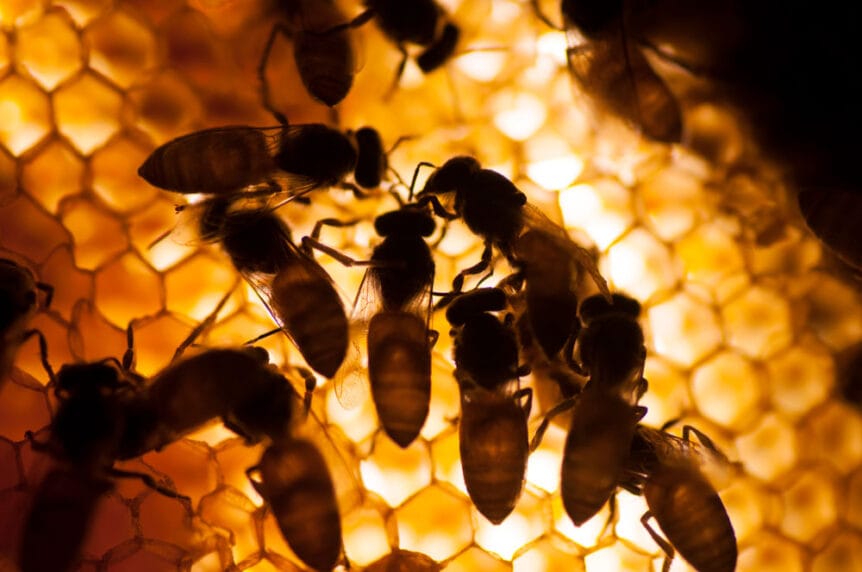
As the weather gets colder, you’ll probably see less and less honeybees around your yard. But unlike other insects that hibernate or go dormant in the winter, honeybees stay active in the safety of their hive. Using social intelligence and biological adaptations, bees are able to live through freezing temperatures and ensure the survival of the hive.
Building A Pantry
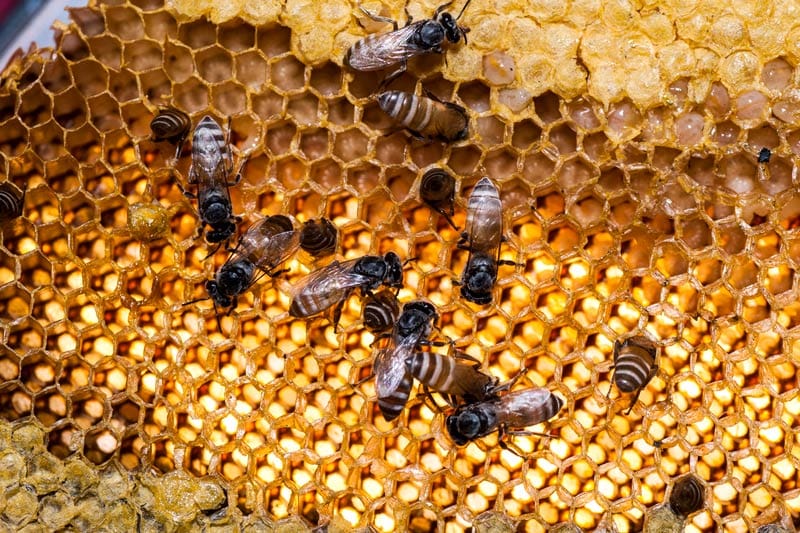
Honey is the sustenance that bees need to get through the winter. It is their main source of energy when flowers are scarce. Starting in late summer, bees will start increasing their honey storage as they prepare for the winter. They will gather nectar, turn it into honey by breaking down its sugars, and store it in wax combs in the hive. Bees will store honey in the “crown” , or top of the hive. This and the periphery of the hive is where it is sealed with wax. Capping the honey in this way will protect it from spoiling, keeping it safe from moisture. Storing the honey at the at specific parts of the hive has a few other benefits. First, the honey provides insulation for the hive, maintaining its core temperature to protect the queen and brood. Storing the honey at the top of the hive will also keep the nest clear for the queen and her eggs. As the bees consume their stores of honey, they will travel upwards, making the top of the hive the ideal location for their winter pantry.
Banishing the Drones
While female bees are worker bees or queens, male bees are considered drones because the only work they do for the hive is mating with the queen. They don’t gather food, build wax, or defend the hive, and they don’t even have stingers. Since mating only occurs in the late spring and summer, the drones have no other role come fall, and are banished from the hive to conserve resources for the winter. The hive only has so much food to go around in the barren winter months, and any extra mouths to feed are just a drain of resources. Simply put, the drone bees are not needed for winter survival and are evicted for the good of the hive.
The female bees will brutally evict the male bees by physically dragging the drones out of the hive and pushing them off the edge. If the drones try to come back, they will be blocked by worker bees. The worker bees may also clip the drone’s wings to prevent them from flying back. Because they can’t fend for themselves or get food, the drones will grow weak and usually die from starvation or cold outside of the warmth of the hive. After the banishment, only a winter crew of female bees remains in the hive, focused entirely on the survival of the queen.
Winter Cluster
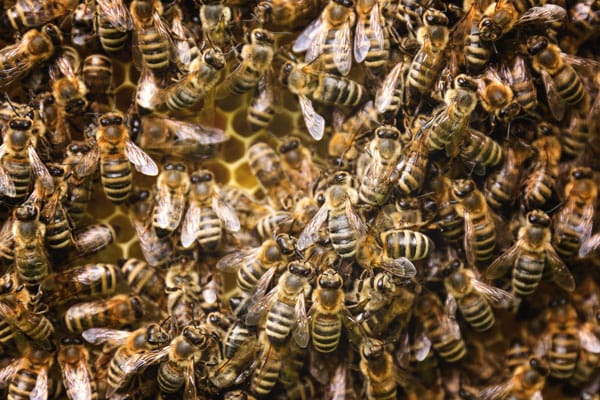
How do honeybees survive the winter? Even in the safety of the hive, the female bees must huddle together in a cluster to survive the cold. When the temperatures drop below 50℉, a compact cluster of bees forms to generate heat. The bees “shiver” to warm up by vibrating their flight muscles without moving their wings. To prevent their abdomen from drawing heat away from their flight muscles, a special heat exchange system allows blood to be looped back to the thorax. This keeps the flight muscles warm without overheating the stomach. The cluster of bees has a tightly packed insulation layer on the outside and a less dense core where heat is generated and the queen is kept warm. The bees will rotate between the outside and inside so no bee freezes and they each get their turn to generate heat.
Biological Shifts
Bees have an impressive ability to switch up how they regulate their temperature between the summer and winter. In the summer, bees function as ectotherms, meaning they rely on external heat to stay warm. Like most insects, bees will allow the sun to warm them up on hot days. Their body temperature warms to match the temperature outside. However, bees become endotherms in the winter and generate their own body heat, using their flight muscles and huddling together. This ability to switch thermoregulation strategies makes bees considered heterotherms.
Another way bees change biologically to survive the winter is the birth of diutinus bees, or winter bees. Triggered by late-season pollen, these winter bees are born late in the season. Therefore, they’re specially developed to survive the cold months and sustain the colony until spring. Winter bees are different from summer bees in two important ways, each of which helps them survive the cold. Winter bees have significantly longer lifespans, allowing them to live for 6-8 months and last through the winter, while summer bees usually only live for 4-6 weeks. In addition, winter bees have larger bodies and can store more fats and proteins to last them through the winter.
Cleansing Flights
On rare winter days when the temperature rises above 50℉, the bees leave the hive for a quick cleansing flight. Cleansing flights allow the bees to keep the hive clean and prevent waste buildup. During the flight, the bees expel accumulated waste and remove any dead bees or other debris. This process ensures the hygiene and health of the hive during the long winter months. Cleansing flights can only be done on warmer days. If bees stay out in the cold for too long, they may not be able to return to the hive. As the weather warms up at the start of spring, cleansing flights increase, emerging from the winter clusters. The goal of the hive then shifts back from survival to growth as the queen lays eggs in late winter.
More from Bugg Control, Inc.
Check out information about “buggs” and more to be informed about keeping your home safe from pests. If you have questions or want pest control expertise, contact us today!
Stay up-to-date by following our socials: Facebook | YouTube
